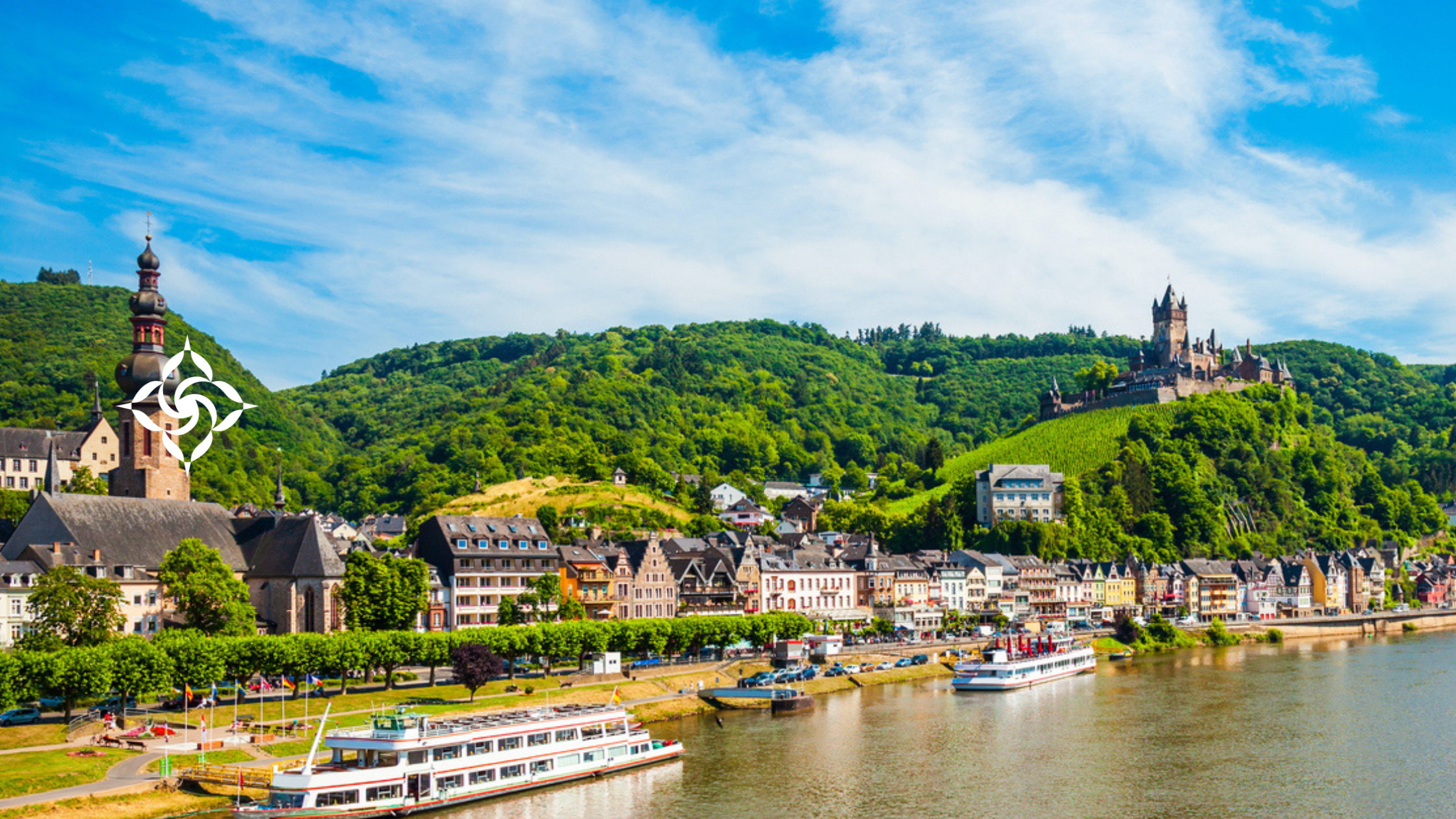
European river cruising is easy to fall in love with. You unpack once. You go to sleep in one city and wake up in another. The crew knows your name by the second morning. You walk off the gangway into the center of Vienna or Strasbourg or Budapest and the day begins.
If you are researching a first river cruise, this guide covers quite a bit: what the experience is actually like, how to choose between rivers and cruise lines, what is generally included in the fare, how it compares to ocean cruising, and how to plan the trip around your sailing. It is written by an Austin-based luxury river cruise advisor… not a travel publication compiling press releases, but a practitioner who plans these trips for a living.
What is a river cruise, exactly?
A river cruise is a voyage on an inland waterway – typically a major European river like the Rhine, Danube, or Seine, though river cruising also happens in Egypt, Southeast Asia, South America, and beyond. Ships are smaller than ocean ships, carrying between 100 and 200 guests on mainstream lines. They sail through the hearts of cities and countryside rather than the open ocean.
The experience is fundamentally different from ocean cruising in ways that matter:
- (Almost) no seasickness – river ships sail on calm inland waterways. For ~ 99% of people, seasickness is a complete non-issue
- City-center docking – you dock steps from the cathedral or the market square, not at a distant port
- Unpack once – the ship moves overnight between ports, so you wake up somewhere new without packing again
- Intimate scale – 100 to 200 guests instead of 3,000; the crew knows your name within a day
- Destination-focused – the ship is the transportation, not the entertainment; the destination does the work
Which European river should you cruise first?
The Danube is the default recommendation for most first-timers, and for good reason. It delivers the most variety per sailing – six to eight ports, multiple countries, a mix of major capitals and smaller towns. The UNESCO Wachau Valley scenery is quite beautiful. And cities like Vienna and Budapest reward the amount of time a river cruise gives you.
The Rhine is the better choice if you are specifically drawn to Germany, France, and the Netherlands – particularly in spring during tulip season, or in autumn for harvest and Christmas markets.
Here is a quick orientation to the main European rivers:
| River | Countries | Best for | Best season |
|---|---|---|---|
| Danube | Germany, Austria, Slovakia, Hungary | First-timers, Christmas markets, Vienna + Budapest lovers | May–Oct, Nov–Dec |
| Rhine | Switzerland, France, Germany, Netherlands | Castle scenery, tulips, Alsatian culture, Christmas markets | April–May, Sep–Oct |
| Douro | Portugal, Spain | Slow luxury, Port wine, intimate experience | May, Jun, Sep |
| Seine | France | Art history, Impressionist landscapes, D-Day beaches | May–Sep |
| Mekong | Vietnam, Cambodia | Bucket-list travelers, spiritual and cultural immersion | Nov–Feb |
How does a typical day on a river cruise work?
This is the question that surprises first-timers most, because the answer is: unhurried. There is no tendering to shore, no getting lost on a ship built for thousands. The rhythm settles in quickly.
- Overnight: the ship sails while you sleep. You go to bed in one city and wake up docked in the next.
- Morning: breakfast from around 7 to 9:30am, then shore excursions departing mid-morning. Most lines offer tiered options – a gentle walking tour, an active option like cycling or hiking, and a cultural or culinary experience.
- Midday: excursions return around noon. Lunch is served onboard, a proper sit-down meal. The ship may begin moving toward the next port.
- Afternoon: largely unstructured. Some guests head back into town independently. Others settle on the sundeck. Onboard programming often fills the 2 to 4pm window.
- Late afternoon: often the sweetest part of the day – wandering ashore, finding a wine bar, strolling the riverbank while the ship remains docked.
- Evening: dinner from around 7pm – multi-course, unhurried, wine poured at the table. A brief port talk previews the next day. Entertainment is low-key. Most guests wind down by 10pm.
What is included in the fare, and what is extra?
This varies significantly by cruise line, and getting it wrong leads to surprises at the end of the trip. Here is the general picture.
Typically included across all mainstream lines
- Accommodation in your stateroom for the duration of the sailing
- All onboard meals in the main dining room
- Non-alcoholic beverages throughout the day
- Wine and beer with lunch and dinner (Viking, AmaWaterways, Avalon, Riverside, Tauck)
- At least one shore excursion per port (standard tour)
- Wi-Fi, functional for messaging and browsing; not reliable for streaming
- Port charges and taxes
Varies by cruise line – check carefully
- Gratuities: included by Tauck and French Country Waterways. Budget $15–$20 per person per day for other lines.
- Open bar beyond meal-time wine: Tauck includes a full open bar policy. Most others do not.
- All excursions included (not just one): Tauck and Lindblad include all excursions. Other lines offer one standard tour per port with optional upgrades.
- Private events: Tauck Exclusive events like castle dinners, and private museum access are unique to Tauck and included in the fare.
Not included by any mainstream line
- International flights, typically the largest additional cost ($1,500–$6,000+ per person depending on class of service)
- Travel insurance, strongly recommended; typically 5–10% of total trip cost
- Pre- and post-cruise hotels, we plan these with Virtuoso amenities where possible
- Spa treatments
How does river cruising compare to ocean cruising?
Many of our clients come from ocean cruising backgrounds. The two formats serve different travel priorities and often work well in combination – ocean cruising for Caribbean or transoceanic itineraries, river cruising for European cultural travel.
| River cruise | Ocean cruise | |
|---|---|---|
| Ship size | 100–200 guests (mainstream) | 500–7,000+ guests |
| Motion/seasickness | Essentially none | Can be significant |
| Where you dock | City center | Often distant port |
| Ports per day | 1, fully explored | Sometimes 2 with less time each |
| Entertainment onboard | Low-key, destination-focused | Broadway shows, casinos, pools |
| Atmosphere | Intimate, crew knows you | Can feel anonymous at scale |
| Focus | The destination | The ship experience |
| Typical length | 7–14 nights | 7–14 nights |
The most common thing we hear from first-time river cruisers who have done ocean cruising: ‘I wish I had done this sooner.’ The most common thing from ocean cruisers who try river cruising and are disappointed: they expect the same level of onboard entertainment and amenities, which river ships intentionally do not provide. Know what you are choosing…and why.
How far in advance should you book?
For most European river cruise sailings, 9 to 12 months in advance is a comfortable window. That gives you access to the best cabin categories and early-booking pricing.
The exception is Christmas market sailings, which book 12 to 18 months in advance as popular departures sell out entirely. If a Christmas market cruise is on your radar, the time to start planning is now, regardless of when you intend to travel.
Last-minute deals exist, but cabin choice is severely limited and popular itineraries rarely discount meaningfully. The best cabins – suites, balcony categories, go to those who plan ahead.
Do you need a travel advisor to book a river cruise?
You can book a river cruise directly. But clients who book through a Virtuoso member agency like Rosedale Travel often receive onboard credits, hosted cocktail receptions, and exclusive advisor perks that are simply not available when booking direct. For Tauck bookings specifically, that includes a complimentary pre- or post-cruise hotel night for new to Tauck guests. Call Tauck yourself and that benefit does not exist.
Beyond the perks, the value of an advisor is in the recommendation itself. Choosing the right line, the right itinerary, and the right cabin for your specific travel style makes a significant difference in the experience, especially for a first-time river cruiser. Getting it right the first time is worth a 30-minute call. Your travel advisor is a relationship with a real person, who will get to know you and your priorities (and quirks) over time.
Frequently Asked Questions
Are European river cruises worth the money?
Most travelers find them worth the investment. The value is in the high level of inclusion: meals, excursions, wine – combined with city-center docking and the intimacy of a small ship. You unpack once. The crew knows your name by the second morning. That is harder to put a price on than it sounds.
How much do European river cruises cost?
Base fares are a premium experience that includes fine dining and daily tours. Additional costs to factor in: international flights, travel insurance, and gratuities for lines that do not include them. For a realistic all-in budget, we build this out with every client before a deposit is placed.
Which are the best river cruise lines for first-time travelers?
The best line depends on your style. Tauck and AmaWaterways are strong choices for those seeking luxury and high-touch service. For clients coming from ocean cruising, it is important to choose a line that aligns with your expectations for onboard amenities and dining – the experiences are different.
What are the most popular rivers for cruising in Europe?
The Danube is the top choice for first-timers. It visits multiple countries and iconic capitals like Vienna and Budapest. The Rhine is the second most popular, famous for its castle scenery and proximity to the Black Forest and French Alsace region.
Are European river cruises all-inclusive?
Most mainstream lines include all meals, beer and wine with lunch and dinner, Wi-Fi, and at least one excursion per port. Truly all-inclusive lines like Tauck go further with all gratuities, an open bar, and exclusive private events in the base fare. What that word means varies significantly by line, which is why we build comparisons before anyone commits.
What is the best time of year for a Danube river cruise?
The primary sailing season runs May through October, offering the most reliable weather for sightseeing. The late season – November and December – is intensely popular for travelers specifically wanting the Christmas markets. That window books 12 to 18 months out. Plan accordingly.
Are single supplements common for European river cruises?
Yes. Because river ships have limited space and smaller guest counts, single supplements are standard for solo travelers. Booking through an advisor can help you identify specific sailings or lines that occasionally offer solo traveler promotions or reduced supplement fees.
Ready to plan your first European river cruise?
Rosedale Travel is Austin’s luxury river cruise specialist – Virtuoso member, Certified Tauck Advisor, and a boutique agency with the experience and relationships to match you to the right sailing. Start with a 30-minute call and we will have a curated recommendation back to you within a week.